Kristen Liu-Wong on Instinct, Violence, and Painting Without Apology
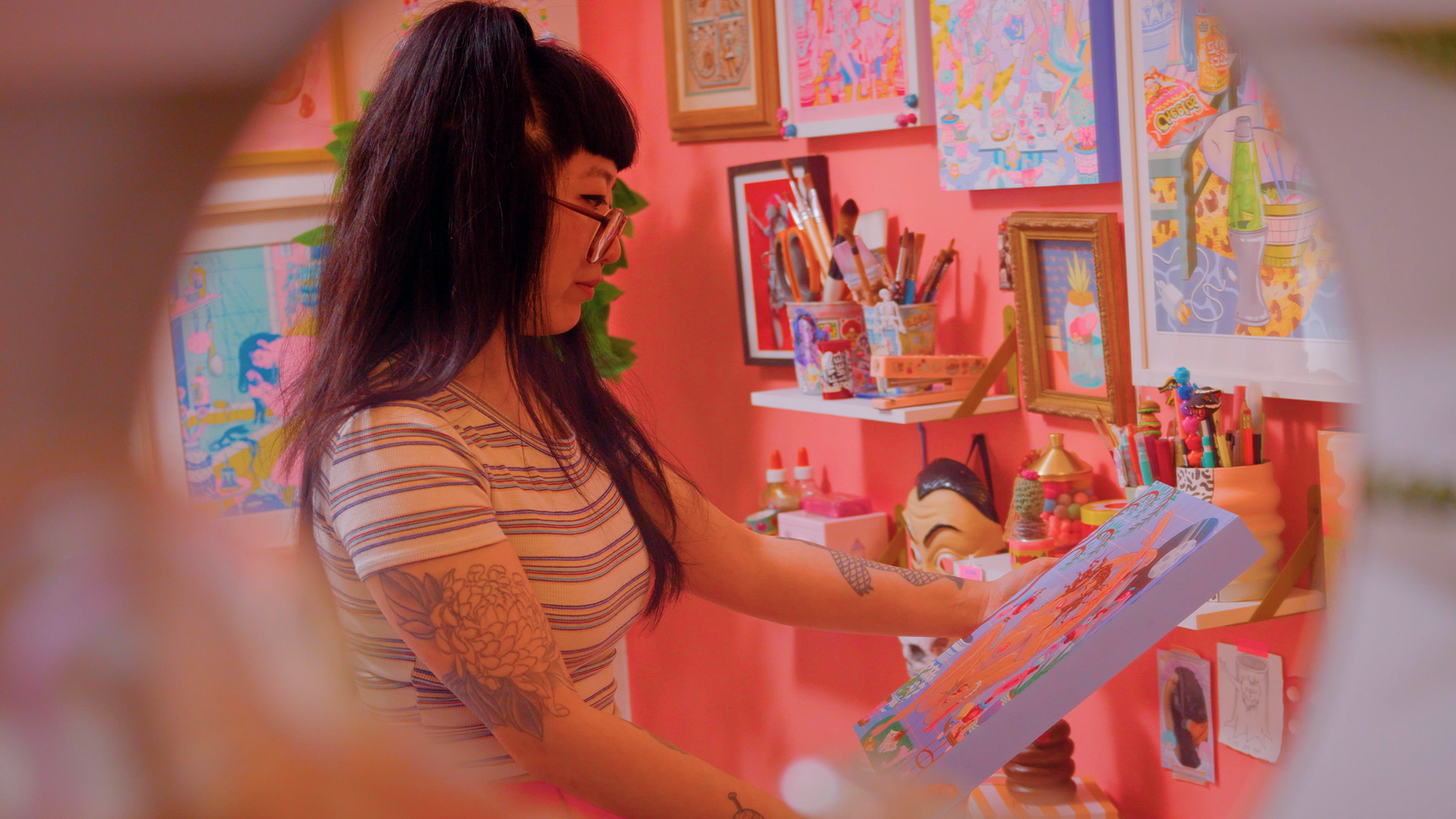
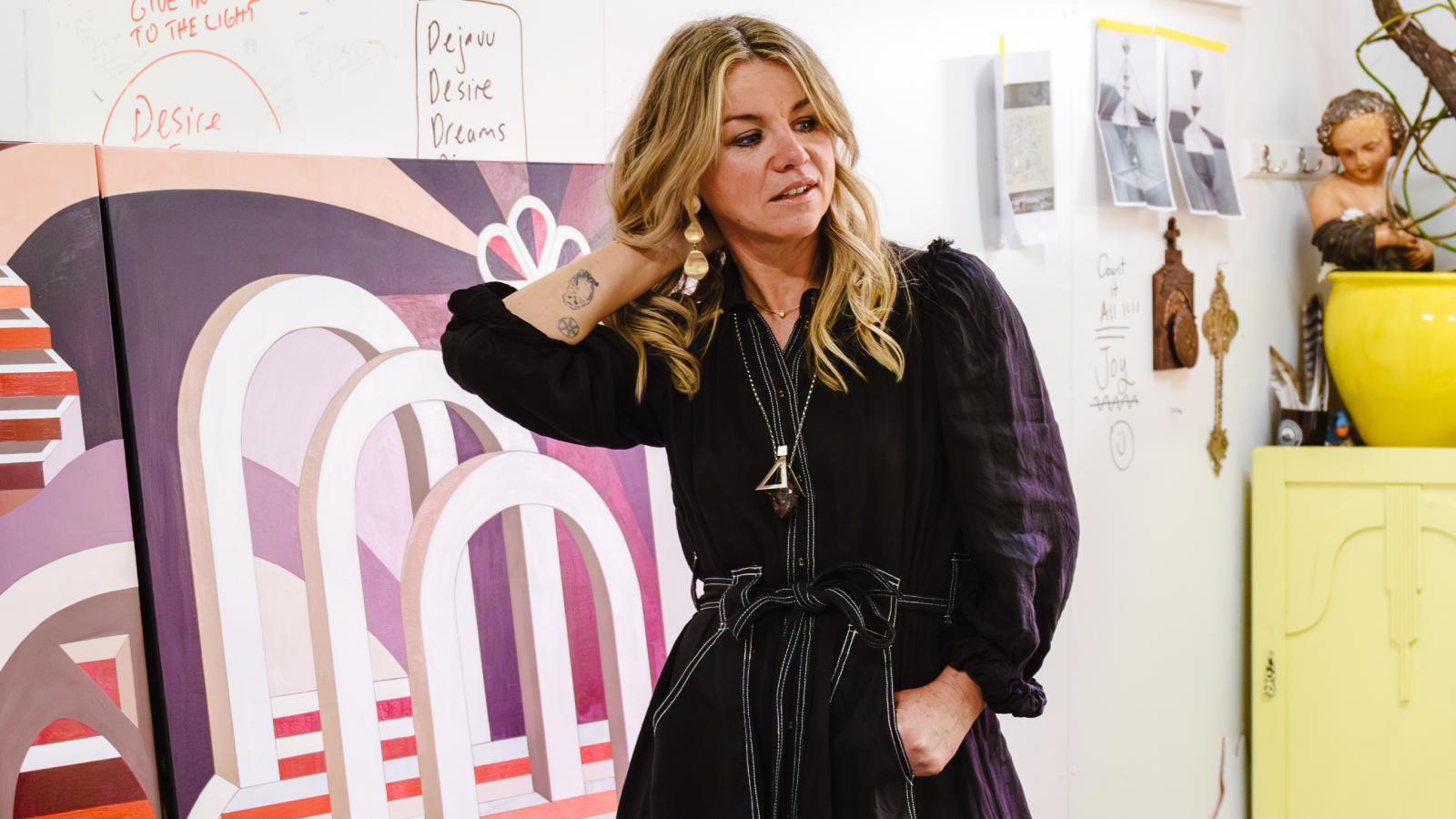
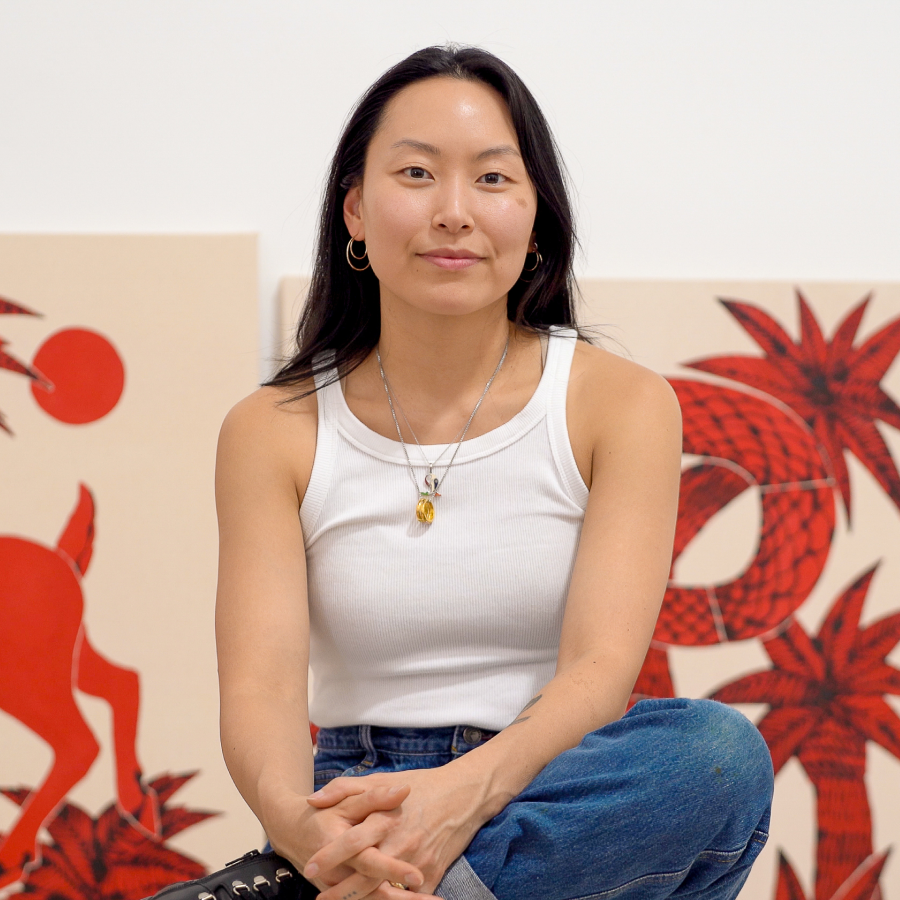
When we spoke with Kristen Liu-Wong, she didn’t shy away from the tension in her work. Her paintings are saturated with color, playful, decorative, even sweet at first glance. But, as she told us, that surface is only part of the story.
“Being human is messy,” she said plainly.
Kristen, a painter and illustrator living in Los Angeles, often brings eroticism, violence, humor, and tenderness into the same frame. When speaking with her, it became clear she isn’t trying to resolve those contradictions. She’s interested in examining them.

Where ideas begin
When we asked where her ideas come from, Kristen explained that most paintings start simply, sometimes from personal experience, other times from film or literature. She keeps a running list of images and concepts, returning to them when the timing feels right.
She told us about a recent piece inspired by Émile Zola’s Germinal, specifically a scene of public revenge titled The Parade. Around the same time, she was thinking about contemporary headlines and the way public outrage unfolds today. That overlap led her to reflect on retaliation, justice, and the uneasy satisfaction that can accompany both.

Kristen Liu-Wong, The Parade, acrylic gouache on paper (or panel), 2026
Again, she returned to the same core idea: “Being human is messy.”
As she described it, her work doesn’t justify violence. It sits with the impulse behind it.
Beauty against brutality
Kristen told us her palette is intentionally bright, pinks, patterns, softness. But the subject matter often complicates that sweetness.
She said she likes the friction. From far away, a painting might appear charming. Up close, the narrative shifts. The viewer has to slow down and reconsider what they’re seeing.
“I don’t believe people are ever any one way,” she explained during our conversation.
Her paintings reflect that belief, beauty and aggression, vulnerability and dominance, desire and danger existing at once.

Kristen Liu-Wong, He Was A Fool For Looking, acrylic gouache on paper (or panel), 2019
Influence without hierarchy
Film came up quickly in our interview. Kristen shared that horror, Italian giallo cinema, and directors like Park Chan-wook have influenced her sense of lighting and composition. Cinema, she told us, offers atmosphere and framing that feed directly into her paintings.
But the real turning point, she said, happened in college after watching the documentary Beautiful Losers. That film changed how she thought about making art.
“It was possible to make great art in an unpretentious way, just doing what you love,” she said.
After that, she shifted away from hyper-rendered drawings that felt like technical proof and toward something more instinctive, bold color, folk art references, and direct imagery.
Growing up in San Francisco also shaped her openness. During our conversation, she spoke about being surrounded by street art, museums, Chinatown, and pop culture. That mix reinforced her belief that inspiration doesn’t have to come from a single tradition. Nothing is off-limits.
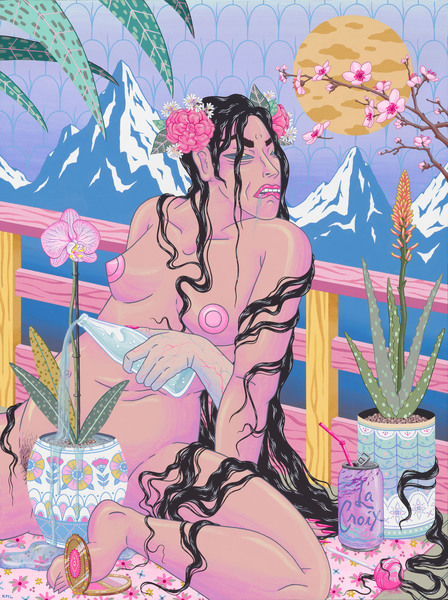
Kristen Liu-Wong, Gushing, acrylic gouache on paper (or panel), 2019
Heightened reality
When we asked whether her paintings come from real experiences, she smiled. Many of them do strange parties, sexual experiences, personal memories, but they’re amplified.
“It’s more about the psychology of what’s happening… it doesn’t need to be a literal representation,” she told us.
Sex and violence appear frequently in her work, but as she explained, intention matters.
“I don’t want to glorify it ever.”
Eroticism, she clarified, isn’t about shock value. It’s about exploring power, vulnerability, and instinct honestly. Violence is present because it’s part of life. Ignoring it would feel dishonest. But it has to serve the work.
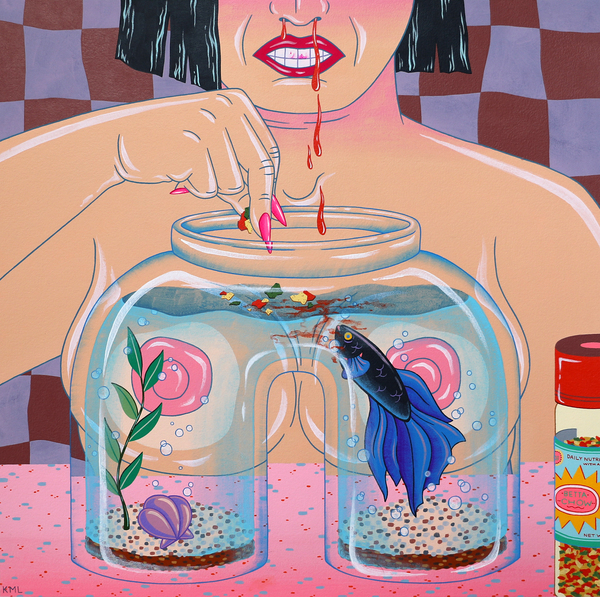 Kristen Liu-Wong, She Had to Feed Him Twice a Day, acrylic gouache on paper (or panel), year unknown.
What art means
Toward the end of our conversation, we asked what art means to her.
Kristen paused before answering.
“I don’t believe in God… I don’t necessarily know what happens to us after we die,” she said.
For her, art fills that uncertainty. As she described it, art becomes a kind of continuity, a thread connecting past and future. A way the human spirit persists beyond the present moment.

Misunderstanding intensity
We also asked whether people ever misread her work.
Because her paintings are overtly sexual and aggressive, she told us, some viewers project that intensity onto her personally. But she sees the work differently.
“My paintings are me amplified,” she said.
In daily life, she avoids confrontation. The canvas is where she can explore strength, aggression, and erotic charge deliberately and safely.
She doesn’t make work to be universally liked. As she explained, she makes it to understand something, about instinct, about power, about being human.
The rest, she’s comfortable leaving open to interpretation.
Learn more about Kristen Liu-Wong and other artists at Seminal Artist Group.
Seminal Artist Group's mission is to make artist studios borderless—connecting visual artists with audiences worldwide through iconic, meaningful products.